Vitex: The Great Balancer, Ripening as the Light Turns
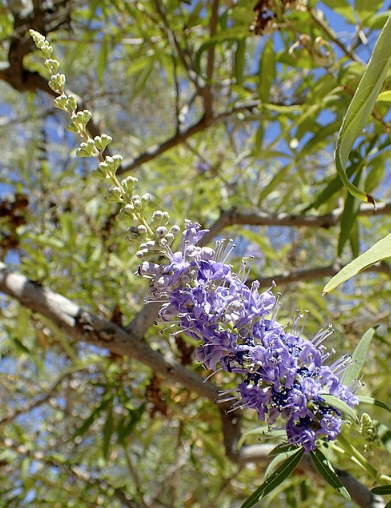
As summer starts leaning into fall, the small dark berries of the chaste tree are ripening on trees across warmer climates, and with them comes one of the most studied herbs in women's health. Vitex has a reputation as "the great balancer," and it turns out that reputation holds up better than most.
The Herb Spotlight Series
This is the second post in our herb spotlight series: a lesser-known plant, rooted in its season, evaluated honestly against the evidence. This time: vitex, also known as chasteberry or Vitex agnus-castus.
A Berry for the Turning Point
Vitex berries ripen in late summer into early fall, right as the year pivots from expansion to contraction, growth to harvest. It's a fitting season for an herb whose traditional role is bringing things back into balance rather than pushing in one direction.
That balancing reputation goes back a long way. The name agnus-castus, "chaste lamb," comes from a belief in antiquity that the plant curbed libido, and it was historically associated with monastic and temple use for exactly that reason. Modern herbalism has moved past that specific claim, but the underlying idea, an herb that quiets and steadies rather than stimulates, carried forward. Unlike ginseng or caffeine, which push the body toward more output, vitex doesn't ask the body to do more. It's traditionally understood to nudge the body's own hormonal signaling back toward its own baseline, rather than supplying a hormone or forcing a direction.
That framing, an herb for finding your own equilibrium rather than for one fixed state, maps neatly onto the calendar moment it belongs to: the hinge point of the year, not fully summer, not yet fall, just past the peak and settling into a new rhythm.
What the Plant Is Used For
Vitex has one of the longest track records in the Western herbal tradition specifically for premenstrual syndrome and broader menstrual cycle irregularities.
Mechanistically, vitex's primary and best-documented action is on dopamine receptors in the pituitary gland, where certain compounds in the plant activate dopamine D2 receptors and suppress the release of prolactin. That matters because elevated prolactin can disrupt the normal signaling that drives ovulation, including the pulsatile release of luteinizing hormone (LH) that triggers and sustains the corpus luteum. By bringing prolactin down, vitex is thought to relieve that suppression, indirectly supporting a healthier luteal phase and more adequate progesterone production. Some research also points to a more direct effect on LH itself, though that pathway is less consistently established than the prolactin-lowering effect that most of the clinical trials are actually built around.
Clinically, it's traditionally reached for in a fairly specific cluster: PMS symptoms, cyclical breast tenderness (mastalgia), irregular or unpredictable cycles, and some of the mood symptoms, irritability, low mood, tearfulness, that show up in the one to two weeks before a period. It's typically taken as a daily, ongoing herb rather than an as needed one, since its effect on pituitary signaling is a slow, cumulative one rather than an acute fix.
What the Research Shows
Of all the herbs in this series, vitex has the most extensive human research behind it. According to PubMed, a systematic review and meta-analysis identified 17 randomized controlled trials for PMS, with 13 of 14 analyzable studies showing a positive effect on total symptoms versus placebo, supplements, or other herbal preparations (DOI). The pooled effect was large.
But the review's authors were upfront that trial quality varied a lot, and the real effect is likely smaller than that pooled number suggests. So vitex isn't a slam dunk, but it's not weak evidence either. It's a genuinely repeated finding that just hasn't been tested as rigorously as the sheer number of studies might imply.
Where That Leaves Us Clinically
Vitex has more research behind it than almost any other botanical for PMS and cyclical hormonal symptoms, and the consistency of a positive signal across more than a dozen trials is notable, even accounting for the quality caveats. For someone dealing with PMS, cyclical breast tenderness, or irregular cycles who wants to try a hormone-modulating rather than hormone-replacing approach, vitex is one of the better supported options in herbal medicine, with the caveat that "well studied" and "definitively proven" aren't quite the same thing here.
If PMS, cycle irregularity, or premenstrual mood symptoms have been affecting your quality of life, it's worth talking it through with a provider who can look at your full hormonal picture and help you figure out whether vitex, or something else, is the right fit.
This post is for educational purposes and isn't a substitute for individualized medical advice. Talk to your doctor before starting any new supplement, especially if you're pregnant, nursing, trying to conceive, or taking hormonal medications, including hormonal birth control.
References
Verkaik S, Kamperman AM, van Westrhenen R, Schulte PFJ. The treatment of premenstrual syndrome with preparations of Vitex agnus castus: a systematic review and meta-analysis. Am J Obstet Gynecol. 2017;217(2):150-166. DOI: 10.1016/j.ajog.2017.02.028