Herb Spotlight Series: Milky Oats
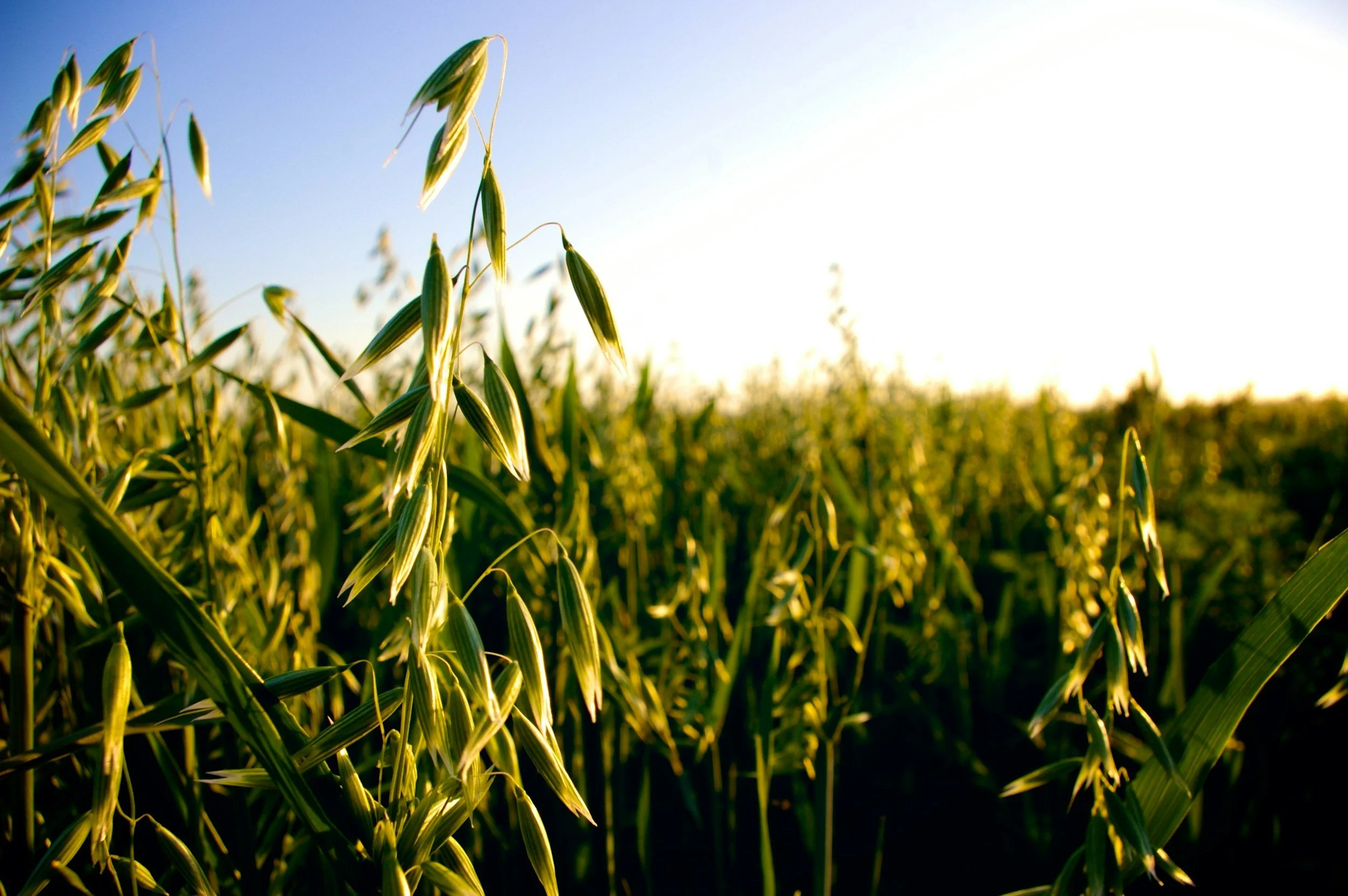
Most of what we know about oats, we know about the grain. But there's a different plant hiding inside the same stalk, one that only exists for about two weeks a year, and it rarely gets talked about outside of herbalism.
The Herb Spotlight Series
Every so often, a plant's story and a patient's story line up in a way worth pausing on. This is the first in an occasional series doing exactly that: one lesser-known herb at a time, rooted in the season it belongs to, with an honest look at the evidence behind it. First up: milky oats.
A Harvest You Have to Catch
If you've ever watched a field of oats grow, you know the plant goes through a brief stage right around now, mid-summer, when the seed head is still green. Squeeze it at just the right moment and a milky, oat-flavored liquid comes out. That's the window. A week or two later, the seed hardens into the oat you'd recognize on a cereal box, and the milky stage is gone until next year.
Herbalists harvest during that narrow stretch on purpose. In its milky state, the plant is understood to be different from the mature grain — softer and more mineral-rich, valued less as food than as a remedy for a tired nervous system.
There's something worth sitting with in that timing. Milky oats are, almost by definition, about catching something restorative before it hardens into something else. Mid-summer is often when the year's momentum starts to outpace the body's ability to keep up, half the year gone, energy spent, autumn's demands not yet arrived. It's not a bad metaphor for burnout: a soft, replenishable state that, pushed too far, sets into something harder to recover.
What the Plant Is Actually Used For
In herbal medicine, milky oat tincture (Avena sativa) is what's called a nervine trophorestorative — an herb thought to slowly nourish and rebuild the nervous system over time, rather than sedate it in the moment. The idea isn't to knock out a symptom on a hard day, but to steadily restore something that's been worn down: less like a sedative, more like replenishing a reserve that's run low.
Traditionally it's reached for in states of nervous exhaustion — the kind of depletion that follows prolonged stress, overwork, grief, or illness, where a person isn't necessarily anxious so much as worn thin. Think frayed rather than wired: running on empty, quick to feel overwhelmed, slow to bounce back.
It's a slow herb. Most herbalists don't expect an effect for several weeks, and it's meant to be taken as a steady daily course rather than reached for as needed. That patience is part of how it's understood to work — the rebuilding happens gradually, in the background, the way rest does.
What the Research Shows
Milky oats is one of the few traditional nervines to have been through real double-blind, placebo-controlled human trials — though those trials looked at focus and mental fatigue rather than the "nervous exhaustion" herbalists describe.
According to PubMed, a single 800 mg dose of a standardized green-oat extract sped up mental processing and improved word recall in adults aged 40 to 65 (DOI). In older adults, a single dose sharpened attention and the ability to focus under distraction, without affecting blood pressure (DOI). Brain-mapping studies point to a plausible mechanism, showing measurable shifts in brain activity during concentration tasks (DOI).
One caveat: these effects were clearest after a single dose. Daily use over 12 weeks didn't produce the same measurable boost (DOI) — so the research so far frames oat extract as an in-the-moment lift for focus more than a long-term daily enhancer.
Where That Leaves Us Clinically
None of these trials tested milky oat tincture for the stress-recovery use herbalism actually built it around, so it's worth holding the two threads a little apart. But the pattern lines up well: a depleted nervous system often shows up first as poor focus and mental fog, which happens to be exactly where the human data is strongest.
For someone who's pushed through a demanding stretch and now feels foggy, flat, or unable to concentrate, milky oats sit in a good place: low-risk, well-tolerated, with real human data behind its cognitive effects, and a long herbal tradition behind the broader pattern of depletion it's meant to address.
It's not a fast fix, and it's not a substitute for dealing with whatever's actually driving the exhaustion. But as a gentle, restorative ally for a very human problem, it holds up better under scrutiny than most herbs its size.
If you're dealing with ongoing fatigue, poor focus, or a sense of nervous system depletion, it's worth talking it through with a provider who can look at your full picture — sleep, thyroid and adrenal function, nutrient status — and help you figure out whether an herb like this fits, and how.
This post is for educational purposes and isn't a substitute for individualized medical advice. Talk to your doctor before starting any new supplement, especially if you're pregnant, nursing, or taking other medications.
References
Kennedy DO, Jackson PA, Forster J, Khan J, Grothe T, Perrinjaquet-Moccetti T, Haskell-Ramsay CF. Acute effects of a wild green-oat (Avena sativa) extract on cognitive function in middle-aged adults: A double-blind, placebo-controlled, within-subjects trial. Nutr Neurosci. 2015. DOI: 10.1080/1028415X.2015.1101304
Berry NM, Robinson MJ, Bryan J, Buckley JD, Murphy KJ, Howe PRC. Acute effects of an Avena sativa herb extract on responses to the Stroop Color-Word test. J Altern Complement Med. 2011;17(7):635-7. DOI: 10.1089/acm.2010.0450
Dimpfel W, Storni C, Verbruggen M. Ingested oat herb extract (Avena sativa) changes EEG spectral frequencies in healthy subjects. J Altern Complement Med. 2011;17(5):427-34. DOI: 10.1089/acm.2010.0143
Wong RHX, Howe PRC, Bryan J, Coates AM, Buckley JD, Berry NM. Chronic effects of a wild green oat extract supplementation on cognitive performance in older adults: a randomised, double-blind, placebo-controlled, crossover trial. Nutrients. 2012;4(5):331-42. DOI: 10.3390/nu4050331